
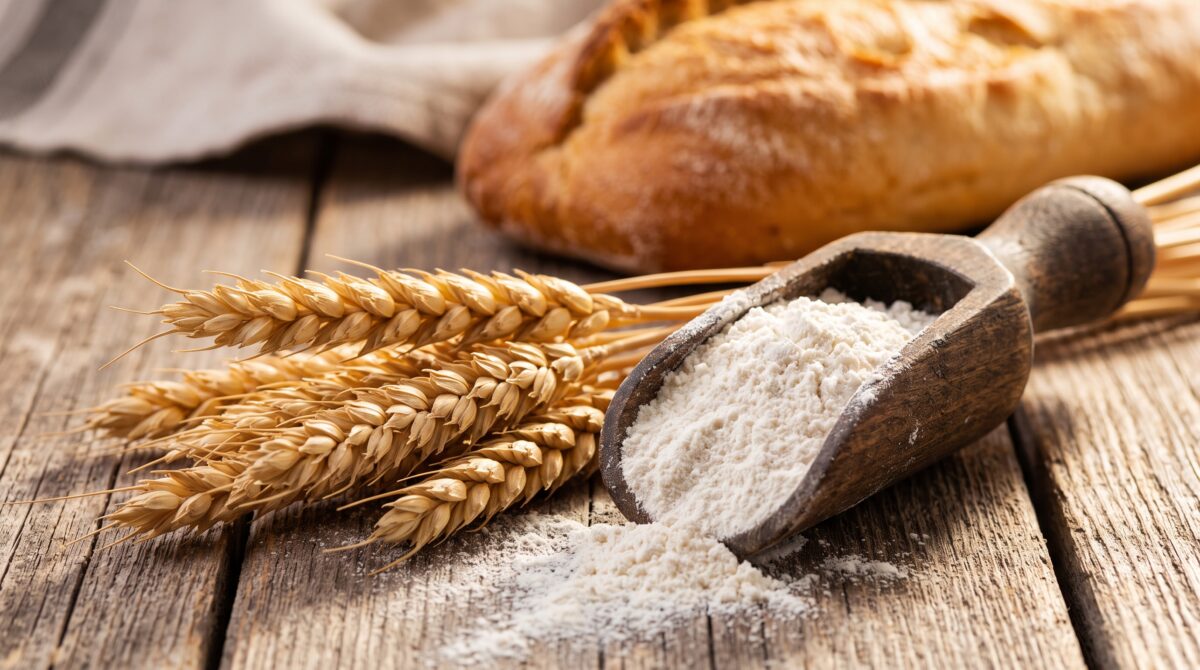
Not all wheat flours are the same: a flour ideal for sandwich bread can produce a cake that is too dense. For a baker, pastry chef, or restaurateur, the right choice starts with understanding their needs.
Understanding the role of gluten
Gluten is the network of proteins that gives dough its elasticity and structure. A protein-rich flour produces a stronger dough that rises well and holds its shape: this is what you need for bread. A softer flour yields tender textures, suited to cakes and light viennoiseries.
Bread, baguettes and leavened doughs
For baking, choose a premium wheat flour. Its strength and consistency deliver well-developed bread, with soft crumb and golden crust. Consistency is essential: if the flour varies from batch to batch, your kneading and fermentation settings must also change.
Delicate pastry
For cakes, biscuits and shortcrust pastry, prefer a specialty pastry flour, designed for fine and delicate textures.
Flatbreads and traditional uses
Type Atta flours suit flatbreads such as chapati and traditional preparations.
Criteria to check before bulk purchase
- Batch consistency: granulation, moisture and elasticity identical at each delivery.
- Packaging: bags from 5 to 50 kg with moisture protection.
- Purity: flour without additives or harmful contaminants.
- Traceability: tracking of the batch, from grain to packaging.
Why choose locally milled flour?
A local mill reduces supply lead times and allows you to communicate directly about your needs. GMM, in Matadi, produces wheat flours for bakeries, processors, and wholesalers throughout the DRC.
Need large volumes? Request a quote or discover our range of wheat flour.